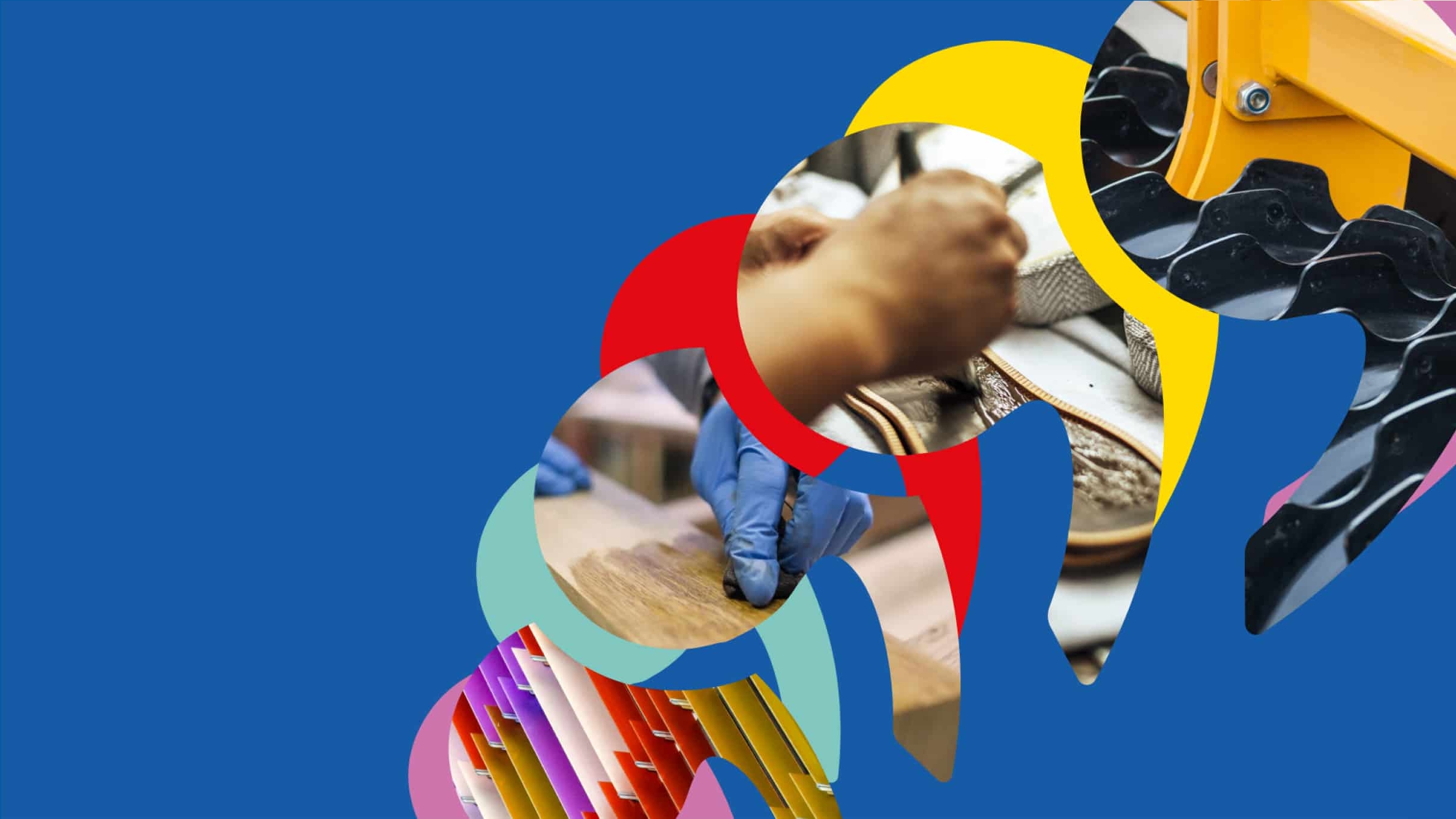

Leather is a natural material obtained by tanning animal hides. But in order to use the material in garments, it is essential to go through a number of subsequent steps to give it a more decorative appearance. In fact, the aesthetics of leather derive largely from the finishes applied to the material, and the polishing phase is a determining factor. Circular brushes, abrasive belts or sponges: there are many solutions for polishing leather. What’s the difference between these abrasive solutions?
Whether you’re designing or restoring a leather object, sanding with an abrasive is essential. The leather must be smoothed with an abrasive to achieve an even surface finish. This step, in addition to being aesthetic, has other functions. Technically, polishing the surface of a piece of leather cleans it of accumulated impurities and prevents dirt from embedding in the material. Also, sanding leather removes excess fibers to improve glue adhesion and restore the leather’s porosity. In leather goods, abrasives are also used to smooth edges for clean, crisp finishes. It also prepares the leather for the application of finishes. In fact, after polishing, leather is better able to absorb the various care products and dyes.
When renovating leather objects, sanding mainly removes the original varnish before cleaning and greasing the leather to nourish it and restore its suppleness. New finishes can then be applied to the leather.
As you can see, it’s essential to sand the leather with an abrasive before working on it. Let’s take a look at the different options available to you.
An abrasive is a set of minerals bonded to a cloth, paper or mesh backing. Abrasive grain size (number and thickness of the grains making up the abrasive) determines its sanding capacity. The larger the grain size, the finer the sanding. But the use of abrasive is just as important, as there are different forms that are either suitable for hand sanding or machine sanding.
Circular brushes are used with hand-held power tools for sanding or grinding. Ideal for satin-finishing leather, circular brushes are an abrasive particularly used in shoemaking.
Abrasive belts are grain belts for use with automatic belt sanders. They can be used to strip large surfaces.
Abrasive sponges are designed for hand sanding. They allow high precision and ensure impeccable finishes. Abrasive sponges have many advantages, not least of which is their ability to work on hard-to-reach surfaces. They are washable and reusable, and have an optimal lifespan.
Beyond sanding and surface preparation, the quality of an assembly also depends on the choice of primer (when required), the type of adhesive used and the application method implemented. Depending on the materials involved, production constraints or the performance requirements sought, bonding processes can vary significantly.
According to the process and the expected performance, some assemblies are carried out immediately after adhesive application, while others require a drying time and/or heat reactivation in order to improve adhesive bonding performance.
Beyond the choice of adhesive and its application method, the use of suitable cleaning solutions also remains essential to preserve materials and ensure the proper maintenance of workshop tools and equipment.
To support leather professionals throughout these technical stages, Vernijura’s teams work directly on-site in workshops to analyse materials, production methods and application constraints. This technical support makes it possible to recommend the most suitable solutions: adhesion primers, adhesive types, application methods, drying times and implementation protocols.
Thanks to this field-based approach and its technical expertise, Vernijura supports leather workshops in optimising their bonding processes and identifying reliable solutions adapted to the requirements of the different leather sectors: leather goods, shoe repair, saddlery, watchmaking and related leathercraft applications.